
Clinical
Explore Aiforia’s comprehensive portfolio of high-performance AI solutions, engineered for both clinical and preclinical applications. Aiforia’s solutions aim to enhance the speed, accuracy, and consistency of analyzing large and complex medical images, especially in pathology.
Learn moreResearch
Aiforia’s research solutions offer fully automated study-centric workflows and pathology image analysis applications that cater to all research areas. Empowered by robust AI capabilities, pathologists and scientists can make discoveries while saving time by automating repetitive tasks – also within the framework of GLP. Aiforia’s solutions can be integrated with any existing laboratory infrastructure to enjoy the full benefits of a digitized workflow.
Learn moreAiforia® Create is the most versatile tool for developing deep learning AI models for image analysis in digital pathology. Its cloud-based, collaborative working environment allows multiple users to work together in real time, anywhere in the world. Praised for its intuitive user interface, it allows users a fast start, even without any prior AI experience.Learn more >
Learn moreExplore Aiforia’s comprehensive portfolio of high-performance AI solutions, engineered for both clinical and preclinical applications. Aiforia’s solutions aim to enhance the speed, accuracy, and consistency of analyzing large and complex medical images, especially in pathology.
Learn moreAI development tool
Aiforia® Create is the most versatile tool for developing deep learning AI models for image analysis in digital pathology. Its cloud-based, collaborative working environment allows multiple users to work together in real time, anywhere in the world. Praised for its intuitive user interface, it allows users a fast start, even without any prior AI experience.
Learn moreResources
Explore some of our latest publications showcasing the discoveries enabled by the Aiforia® Platform.
Learn moreAiforia's insights and resources for AI in pathology. View some of our content pieces from the world of AI.
Learn moreStay updated with Aiforia’s recent announcements. Explore our latest news, updates and announcements.
Learn moreCompany
Find out more about shareholder matters, investment discussions, and financial-related information.
Learn moreAiforia's mission is to transform pathology image analysis with AI, enabling better care for each patient. To succeed, we need our trusted partners. Explore Aiforia’s partner network.
Learn moreExperience our AI solutions firsthand. Explore the list of conferences where you can connect with Aiforia’s team live and book a time to discover the future of AI-powered image analysis.
Learn moreOur mission is to transform pathology image analysis with AI, enabling better care for each patient. Find out more about job openings, thesis opportunities, or submitting applications.
Learn moreAiforia Technologies holds information security to the highest standard. We hold several, globally relevant quality and security certifications, so you can be sure your sensitive information is safe.
Learn moreClinical
Clinical Solutions
AI solutions portfolio
Research
AI development tool
Aiforia® Create
Resources
Company
About us
Investors
Partners
Media
Events
Careers
Quality and security
Sami Qadri, an MD PhD student from the University of Helsinki, is part of a research group studying nonalcoholic fatty liver disease (NAFLD). The group has recently started using AI to assist them in analyzing liver biopsies.
Read Sami's interview below.
"I work in Professor Hannele Yki-Järvinen’s research group. Our main focus of investigation is nonalcoholic fatty liver disease (NAFLD), which has emerged as the most common liver disease worldwide.
My personal studies aim to shine a light on the effects of particular genetic determinants on NAFLD and the mechanisms by which NAFLD arises in these genetically predisposed subjects. A part of this work entails harnessing AI to analyze liver biopsies in completely new ways worldwide."
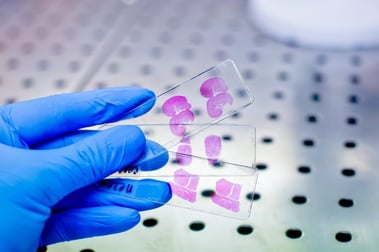
"Most importantly, Aiforia enables segmentation of both normal and pathological structures in liver histology in a way that allows us to accurately quantitate these features in multiple different ways. The traditional method of analyzing liver histology, i.e., visual assessment by pathologists, is rather problematic from the standpoint of medical research.
First, pathologists can at best give us semi-quantitative assessments with regard to the amount or extent of pathology that is present. Aiforia grants us access to truly quantitative measures with continuous metrics instead of arbitrary grading.
Second, we know that the ‘internal calibration’ among pathologists may differ, leading to marked observer-related variability in assessments. For research purposes, these inconsistencies are naturally problematic. Lastly, with Aiforia, we will gain access to completely new kinds of metrics, like quantifying the shape or size of individual lesions or their spatial relationships."
"It was difficult to weigh my expectations as I had never worked with AI before. After seeing the platform’s capabilities, however, I was thoroughly excited from the onset. I am glad to say that all of those expectations have been met and even exceeded!"
"I knew about the basics of AI in general but very little in practice. One misconception I had was the thought that it would take lots of training material for an AI model to be effective. This turned out to be incorrect, as Aiforia’s image segmentation becomes surprisingly specific with just a few annotated examples. Of course, for a robust AI model, you will need variability, but a rough working model can be devised in a matter of minutes."
Read more case studies: