

 Back to all blog posts


Pathologists play a crucial role in supporting clinicians, patients, and the medical field as a whole. They are also among the most overburdened professionals in healthcare systems worldwide due to factors like rising cancer rates, the growing prevalence of chronic diseases, and an aging population, all of which contribute to an increase in patients and samples that need to be analyzed.
Artificial intelligence is designed to assist pathologists with this growing workload, not replace them. To set the record straight: Will AI replace pathologists? The answer is no. Instead, AI-assisted tools can help with the more repetitive and time-consuming aspects of their work, accelerate certain processes, and uncover patterns that the human eye might miss. However, AI isn’t meant to function on its own – it’s about fostering a partnership between humans and AI to enhance the work of pathologists.
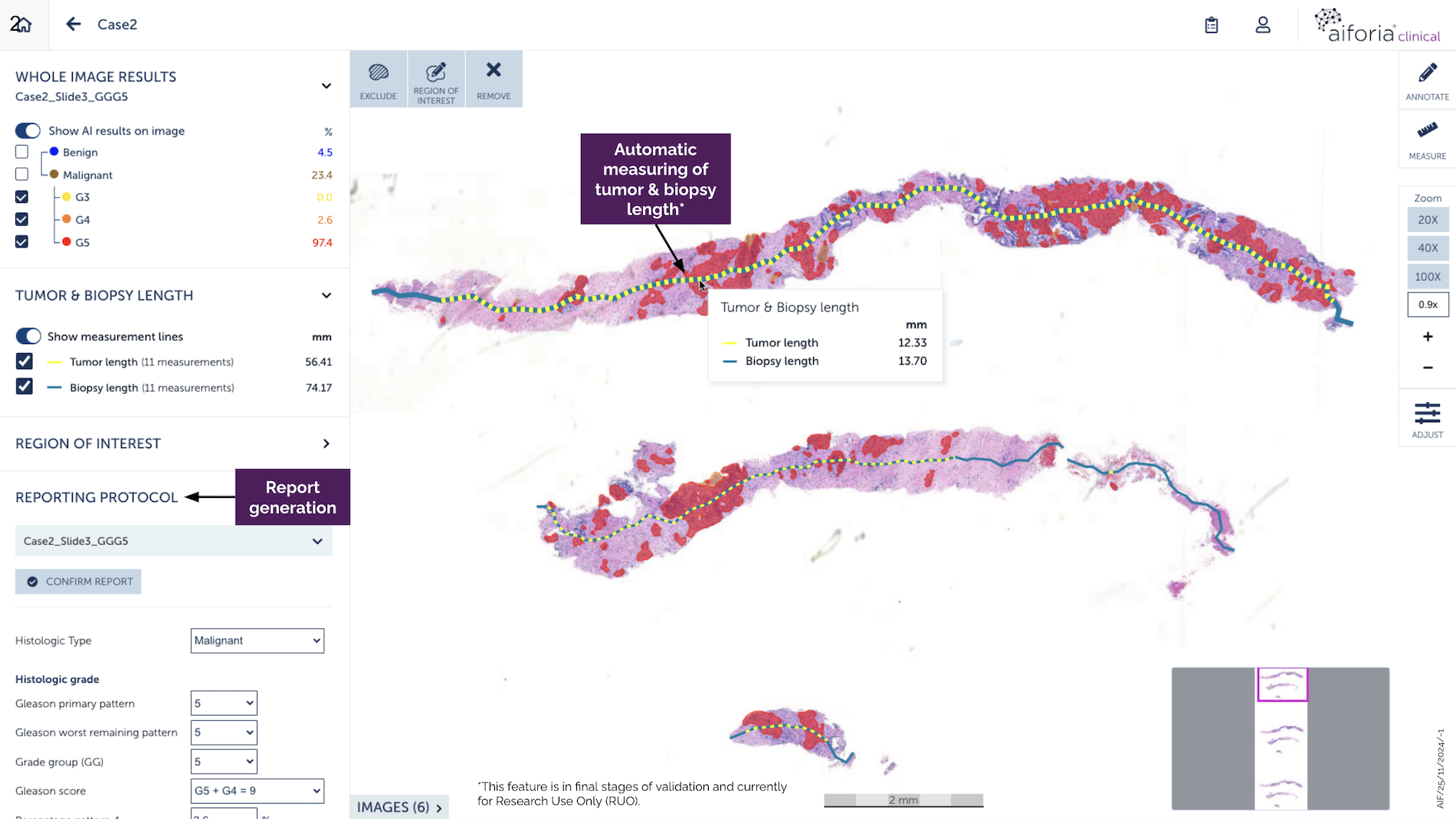
Aiforia’s clinical AI model for prostate cancer within the Aiforia® Clinical Viewer: AI analysis delivers rapid results, helping pathologists quickly detect tumor areas, Gleason Grade Groups, and scores. Quantifying numbers or areas visually can be challenging and subjective, which is where AI's assistive power truly excels.
The emergence of the Digital Pathologist
AI is not the first wave of digitization to impact this field of medicine. Digital pathology has been in practice for some time, enabling pathologists to view digitized images on a computer. The challenge of transporting slides has also been eliminated, as they can now be shared digitally. This is made even more efficient with cloud-based platforms like the Aiforia® Platform.
While digital pathology has certainly simplified the work of pathologists, machine intelligence is set not only to streamline their tasks but also to dramatically boost their capabilities. Rather than replacing pathologists, AI will handle tasks that were never ideally suited for them in the first place.
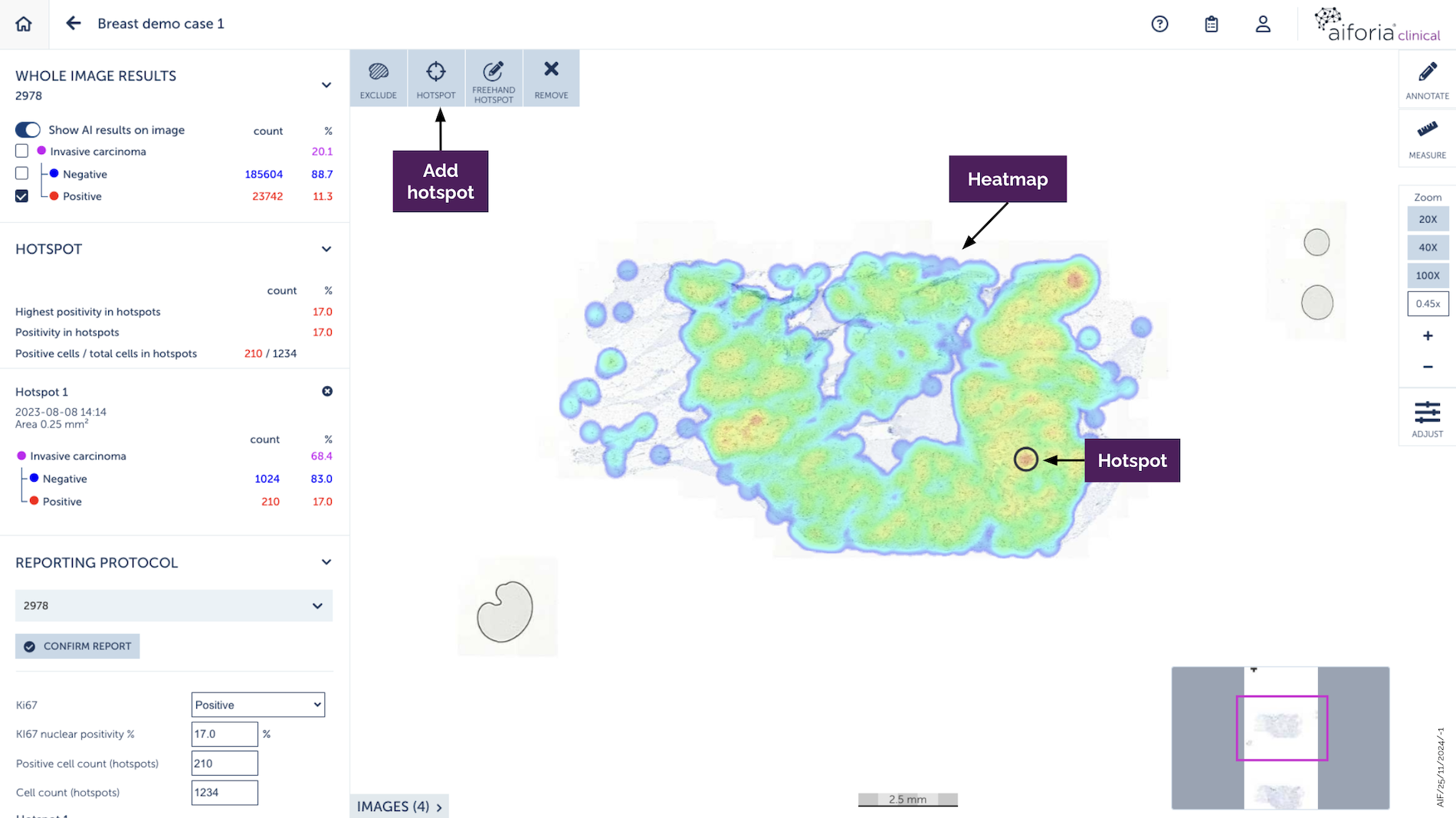
Analysis of Ki-67 stained breast carcinoma within the Aiforia® Clinical Viewer, with the model identifying both Ki-67 negative and positive cells. The resulting heatmap, highlighting Ki-67 positive areas, assists the pathologist in swiftly pinpointing regions of the highest expression for more accurate detection and scoring.
Repetitive, time-consuming, and manual tasks can be automated with AI. For instance, pathologists around the world already rely on Aiforia’s deep learning AI to automate tasks such as mitotic counting. By automating these processes, healthcare professionals gain more time to focus on higher-level challenges while also obtaining faster, more accurate results.
Read more about digital pathology and AI in our comprehensive guide → Digital pathology and AI: your guide to basics and beyond
It’s all about human-AI interaction
Pathologists are not expected to accept AI-provided results as definitive. Instead, they are meant to review and evaluate them, considering whether they align with their own assessments. They can make adjustments, decide what to include or exclude, and ultimately, make the final call. To support this process, it’s important that the AI vendor offers an intuitive, interactive user interface, such as the one in the Aiforia® Platform, which facilitates these types of interactions.
“The AI model might not be right all the time, but that’s not the point. You [pathologist] are meant to interact with it. -- It’s not a one-way path. It’s not information being thrown at you. It’s information being given to you in a way that allows you to assess: do I agree with this? If I take something or do something here, would it change it? And would I agree with it better than I can write it out?” – Richard Doughty, Senior Medical Advisor at Aiforia and Pathologist at Oslo University Hospital
At its most effective, the partnership between pathologists and AI can deliver these benefits:
- Improved diagnostic accuracy and consistency
- Enhanced operational efficiency by streamlining workflows, automating repetitive tasks, and optimizing human resource allocation
- Shorter turnaround times
- Improved detection of subtle changes and rare features
- Cost savings through increased efficiency, reduced diagnostic errors, and optimized use of laboratory resources
In summary, AI tools have not been designed to replace pathologists. With their established expertise and speed, pathologists can use AI to enhance their abilities and reinforce the recognition they’ve earned. AI systems act as supportive technologies, enabling healthcare professionals to make decisions more efficiently and confidently while allowing them to step away from repetitive tasks that are better suited for machines.
My colleague, Richard Doughty, recently visited the Digital Pathology Podcast, where this topic was also covered. Listen to the episode here →